







































Each February, we celebrate Black History Month. Throughout the 28 days, we honor those that have come before us, acknowledge the progress we have made, and remind ourselves that there is still work to be done. While today is in fact the last day of Black History Month, let us not not end the celebration here. Let us not cease our progress. Let us continue to work.
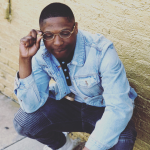
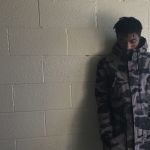
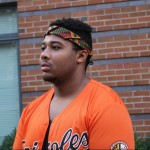
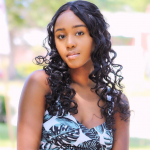
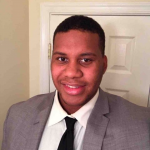
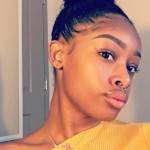
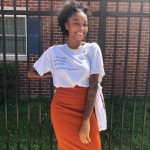
In celebration of Black History Month, myself and Njera Perkins, Kirsten Jones, and Zhané Ashanti Riley wrote this collection of short essays answering the question: “What Does Being Black Mean To You?” Each writer also curated a playlist, reflecting their thoughts for your listening enjoyment.
Justice Gray
America Will Not Put a Hold On Me
“To be a Negro in this country and to be relatively conscious is to be in a rage almost all the time.” - James Baldwin
In 1961, James Baldwin wrote a journal article titled The Negro In American Culture. In the entry, he proclaimed “To be a Negro in this country and to be relatively conscious is to be in a rage almost all the time.” More than 50 years later, that same rage felt by Black people is still present today. Some of those same injustices Baldwin was referring to as the cause of that rage are still present today. The decision whether to remain ignorant to the those injustices or to live in a conscious, constant stage of rage is still one of present day.
At the age of 18, Robert Rihmeek Williams, otherwise known professionally as Meek Mill, was charged with illegally possessing a firearm and sentenced to probation. Throughout his career, this conviction against Williams served as a hindrance against his career, disrupting travel plans for touring, media appearances, and other work-related business one has to carry out as a musician.
In March of 2017, more than 10 years after his initial arrest, Williams was arrested at St. Louis Lambert International Airport after an altercation involving an airport employee seeking to get a picture with him. Williams was charged with misdemeanor assault in November of that year and sentenced to two to four years in prison for violating his parole.
“In a world where Black is wrong and white right, it’s like a combat/
We go to war for our freedom, they say we equal” - Meek Mill, “Stay Woke”
In 2018, after an investigation by the FBI into Williams’ court proceedings with Judge Gencee Brinkley, who handled all of Williams’ court proceedings post-2008, Williams was released from prison. Williams came home with a different message for his fans and his supporters, unlike the one(s) they’d become accustomed to throughout his career. In media appearances, from The Breakfast Club to CNN, Williams spoke on reforming the prison business system that’s followed him since his teenage years.
“We are trapped inside of a system” - Meek Mill
A little over a year after his sentencing for the misdemeanor assault in the St. Louis Airport, Meek released his fourth studio album Championships. The album, most notably his track “Trauma,”served as his redemption story after a legal battle that raged for more than a decade. Throughout the verses of the song, Meek raps about his upbringing in the streets of Philadelphia, the hardships he’s witnessed in his community, and his legal battles.
Due to this consciousness of the prison business system, Meek is one example of many Black people in America that live with the same rage Baldwin spoke on in 1961. As of 2014, according to the NAACP, Black people make up 34 percent of America’s 6.8 million people detained in correctional facilities and are five times more likely to be arrested than white people.
“And in the 13th amendment, it don’t say that we kings/
They say that we legally slaves if we go to the bing” - Meek Mill, “Trauma”
Black men are also not the only ones subject to the systematic racism in this country via the prison business system. The incarceration rate of Black women is twice that of white women, and Black children represent 32 percent of all youth arrested and 42 percent of those detained.
I thank Mr. Williams for using his stardom to propel his voice and speak out on the injustices in this country instead of remaining ignorant to them. I appreciate him using his rage to fuel change for Black and brown kids who look just like he did at 18 years old when he received his first charge. America will not put a hold on me because to be Black is to be resilient.
Click here to listen to Justice’s playlist
Njera Perkins
My Black is Beautiful, My Black is Beautiful, My Black is Beautiful
“U.N.I.T.Y., love a black woman from infinity to infinity.” - Queen Latifah, “U.N.I.T.Y.”
Queen Latifah knew exactly what she was doing when she made “U.N.I.T.Y.” Her song was a protest against the injustices committed by society towards Black women. Her song was revolutionary and it directly addressed the disrespect, domestic violence, sexism, harassment, objectification and humiliation that black women are subjected to everyday. Latifah gave us a voice we didn’t have and a chance to finally be heard.
“The most disrespected woman in America is the black woman. The most unprotected person in America is the black woman. The most neglected person in America is the black woman.” - Malcolm X
These statements couldn’t be more true, but it took hearing Queen Latifah’s powerful pro-women anthem “U.N.I.T.Y.” to realize what my blackness was really worth. Her song is so relevant to me and the entire Black community because it shows her standing up for Black womanhood and promoting the uplifting of Black women while reclaiming our power from our oppressors. These kinds of messages are exactly what we need circulating in mainstream music because if we at the very least don’t demand our respect, who else will?
“Who you callin’ a bi**h?”
Black women don’t fit inside of a neat little box to fit the standards others like to impose on us. We are multi-faceted, strong, beautiful, radical, and independent beings who will be seen, heard, and respected. Black women are a beautiful story of tragedy and triumph that despite going through adversity, we can prevail through all things. It is the strength of our ancestors that make us such powerful figures. We experience so much criticism from the world and our own communities that we don’t realize our true worth.
Speaking for myself, being Black in America is just half of my struggle, but being a Black woman in America is the other half of the battle. Everything from my hair to my accentuated features defies the status quo, but that’s the beauty in my blackness. “U.N.I.T.Y.” is the therapeutic pick-me-up I need to remind myself who I am. The world may not recognize how valuable Black women are and have always been, but it’s our job to encourage one another.
Black History Month is but a small offering for recognizing the value of Black lives and their contributions to the world, but we celebrate Black pride everyday we wake up, look in the mirror and declare we are somebody. We have to take pride in the skin we were blessed with. No one can tear a Black person down as long as they know their worth. My black is beautiful even when the world can’t see it.
“U.N.I.T.Y.” is just one of the many songs that make up the soundtrack of my life, but here’s a playlist truly representative of my black pride.
Click here to listen to Njera’s playlist
Kirsten Jones
Push Through Adversity, Knock Down Doors, and Create New Boundaries
When presented with this project, songs specifically about being the struggles of being Black came to mind. However, I had to quickly remind myself that our struggle does not define all that we are as a people. We are beautiful, strong, intelligent and successful. (Damn I cried just typing that sentence) Even through the struggle of simply being judged based off of the color of our skin, with sometimes fatal repercussions, we push through, knock down doors, and create new boundaries as a people every single day.
In my playlist, I incorporated songs with many different themes. Some did speak on struggles and traumas, some were just enjoyable (i.e “Back That Azz Up”), but one song that I can say best represents the theme of the playlist as a whole is “Reality Check” by Noname. Noname is a rap artist unlike many others, with a unique style and flow. In “Reality Check,” she effortlessly raps about what her experience is like being Black, and encourages people to not limit themselves from reaching their full potential. There are a few lines in the song that capture the essence of her message:
“You know they whipped us niggas
How you afraid to rap it
You went to heaven after so we could free them now
Ain’t no ocean floor when you can be a yeezus now
Don’t fear the light
That dwells deep within
You are powerful
Beyond what you imagine
Just let your light glow”
Click here to listen to Kirsten’s playlist
Zhané Ashanti Riley
Becoming Accountable For the Future
As I strummed through my Black History Month playlist, many of the songs I chose had beautiful messages that put the importance of Black History Month in perspective. However, Jhené Aiko’s song “Frequency” spoke to me in a way that will help me deliver my message of accountability of the present & protection of the generations to come. As the song came to an end, she sang:
Lead them from temptation
Make them royalty,
All the things we’re facing
Make us question it
Lead us to salvation, pour that oil please
That’s how we become Kings & Queens
Being a Black woman in America has not always been the easiest journey. Actually, it has not been easy at all. However, I always take the time to recognize the fact that many generations before me had it A LOT worse. Slavery even counted our ancestors as three-fifths of a person. Yet, and I do thank God for this often, I am here able to build and carry on a legacy for the generations to come.
Although I did not live the easiest life, I lived and now being 22 I’m somehow continuously making to the next day. But what does that mean for the next generation? Right now, it means nothing for me if we’re being honest. But, as Jhené Aiko sang those last words, I realized that we all should have a purpose in life to help the generations to come. If you think about the progress made by Black people, from slavery to now, that would not have happened if we did not have strong men and women who cared not only for themselves, but recognized that they wanted better lives for persons to come.
Having younger siblings, nieces, nephews, little cousins, etc., has been an eye opener for me. I often think about the message I send to them. I often think about how they see me in their eyes because I want them to see an intelligent, hard-working person who is doing right by them and others. I often think about the things I have done to protect them from things that we as Black people are still victims of. Racism from our non-Black peers, schools teaching and instilling wrong the wrong history, and not to mention the fact that laws are being passed to target us.
There is so much that we need to be protecting the younger generations from because if we don’t, the legacies, the hard-work, the blood, sweat, and tears of our ancestors is going to go to waste. Did they really go through many trials and tribulations just for this generation to not care? As a whole, we need to hold ourselves accountable and continue to progress in the movement to one day have all Black people equal to the next man.
Click here to listen to Zhané’s playlist

You might also like
More from Music
SZA For Dummies
In celebration of Women’s History Month, The Demo Tape is highlighting one woman each day with a playlist of their …